

2022 Domaine Matrot Meursault
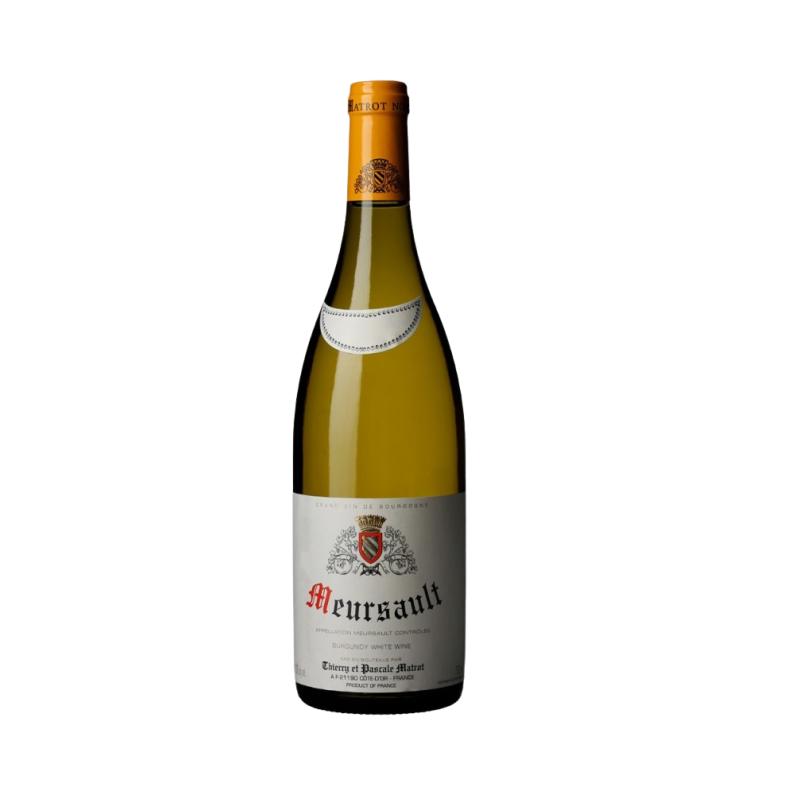
De specificaties zoals vermeld bij de wijn (o.a. wijnjaar) en in de titel zijn leidend en er kunnen geen rechten worden ontleend aan de afbeelding die wordt getoond. Lees meer in onze Frequenty asked questions
| Type of Wine | White |
|---|---|
| Country | France |
| Region | |
| Appellation | |
| Winery | |
| Vintage | 2022 |
| Grape | |
| Content (Alc) | 0.75 ltr (13%) |
| Drink window | 2026 - 2040 |
Out of Stock
Currently unavailable
Notify me when this product is back in stock
Description
The origins of the winery date back to the mid-19th century and floated on the vineyards of the Amoignon family. The name Amoignon was exchanged for Matrot during the First World War because that name had since been married. Thierry and Pascale Matrot are now in charge and both of their daughters also work in the company. Domaine Matrot produces a rich range of Burgundy wines from the Cote de Beaune, both white and red and from basic wines to premier cru wines. At the Matrot domain, everything is bottled themselves and nothing is sold to trading houses; the demand for their products is too high for that. Thierry and his wife Adèle received serious reinforcement from their daughters Elsa and Adèle Ad. Elsa has a university degree in oenology and Adèle has a master's degree in wine trade and is also an oenologist.
The vines for the Meursault have an average age of 35 years. The grapes are harvested manually. Pressing the entire harvest on a pneumatic press and native yeasts are used for fermentation. Malolactic fermentation and controlled temperatures in the cellar. The wine is aged for 12 months on lees in oak barrels of 1 to 5 years. 1 month in barrels to prepare the wine for bottling and lentilcular filtration. They collect 12 lots to bring out a classic Meursault vintage of its kind. Wine with character, refined and often described as dry and soft at the same time. It seduces with yellow fruit, supported by citrus notes in the aftertaste.
FACT: In the Tab: Appendix you will find the official fact sheet of this beautiful wine. We will automatically send it to you when you order this wine and if you pick it up in our beautiful conditioned Wine Warehouse , you will also receive a nice collection discount.
Specifications
| Block Bundle Options | No |
|---|---|
| Type of Wine | White |
| Country | France |
| Region | Bourgogne |
| Appellation | Meursault |
| Winery | Domaine Matrot |
| Grape | Chardonnay |
| Biological certified | No |
| Natural wine | No |
| Vegan | No |
| Vintage | 2022 |
| Drinking as of | 2026 |
| Drinking till | 2040 |
| Alcohol % | 13 |
| Alcohol free/low | No |
| Content | 0.75 ltr |
| Oak aging | Yes |
| Sparkling | No |
| Dessert wine | No |
| Closure | Cork |
| Vinous rating | 91 |
| Tasting Profiles | Complex, Dry, Aged on wood, Powerful, Mineral, Round, Full, White fruit |
| Drink moments | Cadeau!, Lekker luxe, Met vrienden, Open haard, Romantisch |
Professional Reviews
Vinous
(89-91)
Drinking Window
2025 - 2039
From: Now, For My Latest Trick: Burgundy 2022 (Jan 2024)
The 2022 Meursault Village contains no new oak, as usual. The lively bouquet has enticing scents of dried honey, peppermint and orange pith. This just grows in the glass. The palate is medium-bodied with a smooth, slightly viscous texture and fine acidity. It's quite spicy with a dash of stem ginger towards the persistent finish. Very promising.
- By Neal Martin on October 2023
Elsa Matrot pulled the short straw and accompanied me through the Domaine Thierry & Pascale Matrot portfolio. Our conversation kept going off on tangents, and somehow, between the Bourgogne Blanc and Corton-Charlemagne, I managed to convince her never to eat another croissant. It’s a long story.
“It was an early, sunny vintage,” she explains. “We started August 25, though that’s not as early as in 2020 that began on August 17. It seems normal to start around this time of year after a very hot summer, so it’s not a surprise. But interestingly, like 2020, we started with the reds in Volnay Santenots as the berries were ready to pick. We had a long 15-day picking. There’s a good volume in reds. We didn’t overproduce as we take off the buds, but the yields were still 45-55hL/ha and in whites, 55-60hL/ha. That’s what we expected after the frost the previous year, as the vines tend to compensate. There was a day of frost, but there was no damage. It was quite an easy vintage overall, and the fruit did not require much sorting. The berries contained a lot of juice, but not so much to consider saignée, and it was fairly easy to vinify. We did just two daily punch downs, as we don’t seek a big concentration of tannins. The whites were a bit rich, but in barrel they gained acidity whilst the reds gained complexity. The reds are all de-stemmed and aged between 10% and 30% new oak. When we have warm conditions, we try to keep natural acidity and try to pick around 3.3 pH. Historically, we have never used new oak for the whites. My grandfather used to give the barrels away to Michelot or Roulot and then buy them back after a year. There is also no acidification for any of the cuvées, another one of my father’s rules, and we did not chaptalize in 2022.”
This domaine is quickly improving under sisters Elsa and Adèle Matrot. The 2022s are perhaps the best that I have tasted to date. I was blown away by their Meursault Les Perrières, but don’t ignore their Blagny La Pièce Sous la Bois, whose higher elevation was an advantage in the warm summer, their very useful Meursault Rouge or over-achieving Maranges Villages. This is a domaine going place. Hitch a ride.
Lorem ipsum dolor sit amet, consectetur adipiscing elit. Sed do eiusmod tempor incididunt ut labore et dolore magna aliqua...
Exclusive Content
Sign in to unlock professional wine reviews from world-renowned critics
Wijnhuis
Domaine Matrot is a prestigious wine producer located in the heart of the Burgundian wine region in France. The history of Domaine Matrot goes back several generations. It started at the end of the 19th century when Joseph Matrot founded the estate in Meursault, a renowned village for producing exceptional Chardonnay wines.
Over the years, the Matrot family has painstakingly cultivated and expanded their vineyards, acquiring prime plots of land in some of Burgundy's most prized appellations, including Meursault, Puligny-Montrachet and Volnay. This strategic acquisition of vineyards has enabled Domaine Matrot to produce a wide range of high-quality wines that showcase the unique terroir of each vineyard location. Domaine Matrot is known for its traditional winemaking techniques, prioritizing minimal intervention to allow the expression of the terroir and the characteristics of the grape varieties to shine through in the final wines. They typically ferment their wines using indigenous yeasts and age them in French oak barrels to add complexity and structure while respecting the delicate nuances of the fruit.
The estate has been passed down through several generations of the Matrot family, each contributing their expertise and passion for winemaking to uphold the domain's reputation for excellence. Today, Domaine Matrot is run by the current generation of the family, who continue to uphold the estate's traditions while embracing modern developments in viticulture and winemaking. Domaine Matrot consistently produces wines that reflect Burgundy's unique terroir and skill.

The origins of the winery date back to the mid-19th century and floated on the vineyards of the Amoignon family. The name Amoignon was exchanged for Matrot during the First World War because that name had since been married. Thierry and Pascale Matrot are now in charge and both of their daughters also work in the company. Domaine Matrot produces a rich range of Burgundy wines from the Cote de Beaune, both white and red and from basic wines to premier cru wines. At the Matrot domain, everything is bottled themselves and nothing is sold to trading houses; the demand for their products is too high for that. Thierry and his wife Adèle received serious reinforcement from their daughters Elsa and Adèle Ad. Elsa has a university degree in oenology and Adèle has a master's degree in wine trade and is also an oenologist.
The vines for the Meursault have an average age of 35 years. The grapes are harvested manually. Pressing the entire harvest on a pneumatic press and native yeasts are used for fermentation. Malolactic fermentation and controlled temperatures in the cellar. The wine is aged for 12 months on lees in oak barrels of 1 to 5 years. 1 month in barrels to prepare the wine for bottling and lentilcular filtration. They collect 12 lots to bring out a classic Meursault vintage of its kind. Wine with character, refined and often described as dry and soft at the same time. It seduces with yellow fruit, supported by citrus notes in the aftertaste.
FACT: In the Tab: Appendix you will find the official fact sheet of this beautiful wine. We will automatically send it to you when you order this wine and if you pick it up in our beautiful conditioned Wine Warehouse , you will also receive a nice collection discount.
| Block Bundle Options | No |
|---|---|
| Type of Wine | White |
| Country | France |
| Region | Bourgogne |
| Appellation | Meursault |
| Winery | Domaine Matrot |
| Grape | Chardonnay |
| Biological certified | No |
| Natural wine | No |
| Vegan | No |
| Vintage | 2022 |
| Drinking as of | 2026 |
| Drinking till | 2040 |
| Alcohol % | 13 |
| Alcohol free/low | No |
| Content | 0.75 ltr |
| Oak aging | Yes |
| Sparkling | No |
| Dessert wine | No |
| Closure | Cork |
| Vinous rating | 91 |
| Tasting Profiles | Complex, Dry, Aged on wood, Powerful, Mineral, Round, Full, White fruit |
| Drink moments | Cadeau!, Lekker luxe, Met vrienden, Open haard, Romantisch |
Vinous
(89-91)
Drinking Window
2025 - 2039
From: Now, For My Latest Trick: Burgundy 2022 (Jan 2024)
The 2022 Meursault Village contains no new oak, as usual. The lively bouquet has enticing scents of dried honey, peppermint and orange pith. This just grows in the glass. The palate is medium-bodied with a smooth, slightly viscous texture and fine acidity. It's quite spicy with a dash of stem ginger towards the persistent finish. Very promising.
- By Neal Martin on October 2023
Elsa Matrot pulled the short straw and accompanied me through the Domaine Thierry & Pascale Matrot portfolio. Our conversation kept going off on tangents, and somehow, between the Bourgogne Blanc and Corton-Charlemagne, I managed to convince her never to eat another croissant. It’s a long story.
“It was an early, sunny vintage,” she explains. “We started August 25, though that’s not as early as in 2020 that began on August 17. It seems normal to start around this time of year after a very hot summer, so it’s not a surprise. But interestingly, like 2020, we started with the reds in Volnay Santenots as the berries were ready to pick. We had a long 15-day picking. There’s a good volume in reds. We didn’t overproduce as we take off the buds, but the yields were still 45-55hL/ha and in whites, 55-60hL/ha. That’s what we expected after the frost the previous year, as the vines tend to compensate. There was a day of frost, but there was no damage. It was quite an easy vintage overall, and the fruit did not require much sorting. The berries contained a lot of juice, but not so much to consider saignée, and it was fairly easy to vinify. We did just two daily punch downs, as we don’t seek a big concentration of tannins. The whites were a bit rich, but in barrel they gained acidity whilst the reds gained complexity. The reds are all de-stemmed and aged between 10% and 30% new oak. When we have warm conditions, we try to keep natural acidity and try to pick around 3.3 pH. Historically, we have never used new oak for the whites. My grandfather used to give the barrels away to Michelot or Roulot and then buy them back after a year. There is also no acidification for any of the cuvées, another one of my father’s rules, and we did not chaptalize in 2022.”
This domaine is quickly improving under sisters Elsa and Adèle Matrot. The 2022s are perhaps the best that I have tasted to date. I was blown away by their Meursault Les Perrières, but don’t ignore their Blagny La Pièce Sous la Bois, whose higher elevation was an advantage in the warm summer, their very useful Meursault Rouge or over-achieving Maranges Villages. This is a domaine going place. Hitch a ride.
Lorem ipsum dolor sit amet, consectetur adipiscing elit. Sed do eiusmod tempor incididunt ut labore et dolore magna aliqua...
Exclusive Content
Sign in to unlock professional wine reviews from world-renowned critics
Domaine Matrot is a prestigious wine producer located in the heart of the Burgundian wine region in France. The history of Domaine Matrot goes back several generations. It started at the end of the 19th century when Joseph Matrot founded the estate in Meursault, a renowned village for producing exceptional Chardonnay wines.
Over the years, the Matrot family has painstakingly cultivated and expanded their vineyards, acquiring prime plots of land in some of Burgundy's most prized appellations, including Meursault, Puligny-Montrachet and Volnay. This strategic acquisition of vineyards has enabled Domaine Matrot to produce a wide range of high-quality wines that showcase the unique terroir of each vineyard location. Domaine Matrot is known for its traditional winemaking techniques, prioritizing minimal intervention to allow the expression of the terroir and the characteristics of the grape varieties to shine through in the final wines. They typically ferment their wines using indigenous yeasts and age them in French oak barrels to add complexity and structure while respecting the delicate nuances of the fruit.
The estate has been passed down through several generations of the Matrot family, each contributing their expertise and passion for winemaking to uphold the domain's reputation for excellence. Today, Domaine Matrot is run by the current generation of the family, who continue to uphold the estate's traditions while embracing modern developments in viticulture and winemaking. Domaine Matrot consistently produces wines that reflect Burgundy's unique terroir and skill.
 Follow the latest news about all our wines, promotions, and new selections.