

2020 Boekenhoutskloof Noble Late Harvest
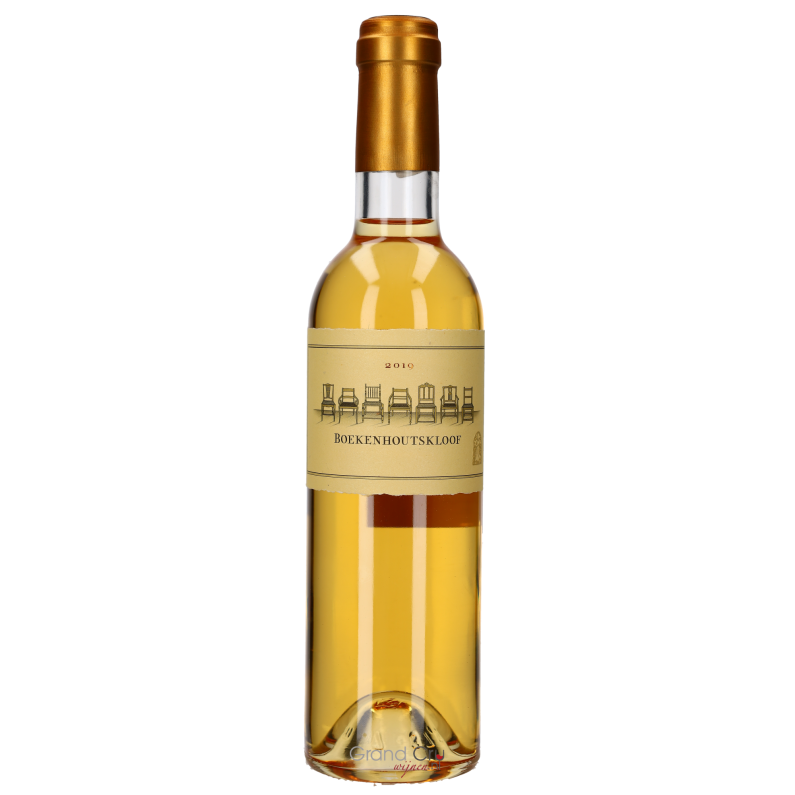
De specificaties zoals vermeld bij de wijn (o.a. wijnjaar) en in de titel zijn leidend en er kunnen geen rechten worden ontleend aan de afbeelding die wordt getoond. Lees meer in onze Frequenty asked questions
| Type of Wine | White |
|---|---|
| Country | |
| Region | |
| Appellation | Franschhoek |
| Winery | |
| Vintage | 2020 |
| Grape | |
| Content (Alc) | 0.375 ltr (11.5%) |
| Drink window | 2023 - 2035 |
Ordering in bulk? Log in to request a quote
Low Stock
Only 1 left
Backorder Information
It is possible to order this article in backorder. This is possible with items that we can generally have in stock again in 3-5 working days. You can simply order it, but it is important to mention that we only send the order when it is complete.
Notities
Foto
Proefnotities
Heb je deze wijn geproefd?
Bewaar je beoordeling en aantekeningen.
Bewaar je beoordeling en aantekeningen.
Heb je deze wijn geproefd?
Log in om je proefnotitie op te slaan.
Log in om je proefnotitie op te slaan.
InloggenHoe wil je je wijn beoordelen?
Max 5 MB. JPG, PNG, WebP.
Hoe smaakt het?
Klik op wat het beste past. Alles is optioneel.
Welke geuren en smaken herken je?
Klik op alles wat je herkent. Dit is optioneel.
Uiterlijk
Neus
Aroma's (neus)
Smaak
Smaken (mond)
Afdronk
Wijngegevens
Automatisch ingevuld vanuit productgegevens.
Persoonlijke gegevens
Boekenhoutskloof is a high-profile winery in Franschhoek that is particularly impressive in terms of quality. Despite its somewhat unusual African name for the 'French' Franschhoek, Boekenhoutskloof was founded three centuries ago by French Huguenots. The current winemaker Marc Kent also still has a thing for France. He visits there at least once a year to gain new inspiration in the northern Rhône, Cornas. In 2020, Boekenhoutskloof was voted the best Winery in South Africa by Platter
The Boekenhoutskloof Noble Late Harvest is a noble wine from late-harvested semillon grapes. Lively gold in the glass. With recognizable botrytis in the scent in which acacia blossom, white peach, pear and subtle flowers can also be discovered. The wine is full of character and intense. With an elegant sweetness. And with flavors of peach, apricot and nectarine. Followed by brioche, marmalade and elderflower. Also a light spiciness. What a concentration. And what a length!
A very special dessert wine is this Boekenhoutskloof Noble Late Harvest. Delicious with sweet dishes with apricots and peaches (e.g. tartelettes) or other fruit desserts. Heavenly scenes with crêpes Suzette. By the way: try something different and serve a piece of blue cheese with it. Surprising. Goes well with: fruit desserts, crêpes Suzette, Roquefort
| Type of Wine | White |
|---|---|
| Country | South Africa |
| Region | Western Cape |
| Appellation | Franschhoek |
| Winery | Boekenhoutskloof |
| Grape | Semillon |
| Biological certified | No |
| Natural wine | No |
| Vegan | No |
| Vintage | 2020 |
| Drinking as of | 2023 |
| Drinking till | 2035 |
| Alcohol % | 11.5 |
| Alcohol free/low | No |
| Content | 0.375 ltr |
| Oak aging | Yes |
| Sparkling | No |
| Dessert wine | Yes |
| Closure | Cork |
| Parker rating | 91 |
| Vinous rating | 90 |
| Tasting Profiles | Aromatisch, Bloemig, Fruitig, Krachtig, Kruidig, Rijk, Rond, Steenfruit, Tropisch fruit, Vol, Zoet |
| Drink moments | Cadeau!, Met vrienden |
| Sommy Pairing Beschrijving | De 2020 Boekenhoutskloof Noble Late Harvest is een prachtige dessertwijn met een levendig goudkleur en een geur vol botrytis, acaciabloesem, witte perzik en peer. De smaak is intens en elegant, met tonen van perzik, abrikoos, nectarine en subtiele hints van brioche en marmelade die zorgen voor een rijke en harmonieuze ervaring. Deze wijn past uitstekend bij fruitige desserts zoals tartelettes met abrikoos en perzik of crêpes Suzette, vooral wanneer ze net een beetje warm geserveerd worden. Daarnaast is het verrassend lekker om de wijn te combineren met een stukje blauwe kaas zoals Roquefort, waardoor de zoetheid en de fruitige aroma's mooi worden versterkt. Een heerlijke keuze voor een afsluitend dessert of een kaasplankje dat een elegante en smaakvolle touch krijgt. |
Parker
The Wine Advocate
RP 91
Reviewed by:
Anthony Mueller
Release Price:
$60
Drink Date:
2023 - 2035
The 2020 Noble Late Harvest Semillon offers notions of apricot purée, honey and lemon panna cotta with spiced poached apples. Additional hints of cinnamon, saffron and ginger blend with honeysuckle and quince purée undertones. This gorgeous, sweet wine carries a gentle 11% alcohol content. However, it could benefit from a touch more acidity to elevate its score further. It fermented and matured for 36 months in new French oak barrels. Only 1,450 bottles were produced.
Published: May 09, 2024
Lorem ipsum dolor sit amet, consectetur adipiscing elit. Sed do eiusmod tempor incididunt ut labore et dolore magna aliqua...
Vinous
90
Drinking Window
2024 - 2038
From: The A to Z of South Africa (Nov 2023)
The 2020 Noble Late Harvest is pure Semillon with 157g/L residual sugar. Coming from three parcels, it was basket-pressed for two days and aged entirely in new French oak for 36 months. The very pure bouquet has dried honey, golden raisin, quince and yellow flowers, beautifully defined. The palate is exquisitely balanced, smooth and harmonious. It is not quite as complex as the 2019 or 2020 but with great delineation towards the finish. Very fine.
- By Neal Martin on August 2023
Boekenhoutskloof had witnessed almost biblical levels of rain earlier in 2023, some 700mm in three weeks according to winemaker Gottfried Mocke – difficult to believe upon arrival since the sun was shining. However, a sudden deluge was a timely reminder that it has one of the wettest microclimates in the Cape. “We have good infrastructure in place,” Mocke assures me, “so we were better prepared than before and didn’t have too much damage. After the drought [2016 to 2019 growing seasons], there is more emphasis on cover crops, and we take more care of our topsoils that are decomposed and frail. Soils are high in nitrogen but lack other things like magnesium, calcium and potassium. Cabernet Sauvignon is a very sensitive variety, and it is easy to obtain pyrazines if picked too early and then wait too long so that it becomes too ripe. There are foliage sprays to help photosynthesis now, and if I need to add nitrogen, then it is applied in organic form: mulch, fava beans etc. In 2021, I added some early-picked fruit to lend acidity, and because of this, I bottled a bit later.” This is a strong set of wines that straddle more commercially focused labels such as the phenomenally successful Chocolate Block brand, whose name is a bit of a misnomer since the wine itself is nowhere near as chocolaty as earlier vintages, the Swartland-sourced fruit predicting a wine that combines elegance with fruit intensity. In this vintage, I definitely prefer the Stellenbosch Cabernet Sauvignon to its Franschhoek counterpart, though neither quite match their strongest cards: their Sémillon and Syrah.
Lorem ipsum dolor sit amet, consectetur adipiscing elit. Sed do eiusmod tempor incididunt ut labore et dolore magna aliqua...
Exclusive Content
Sign in to unlock professional wine reviews from world-renowned critics
Boekenhoutskloof Wines
Boekenhoutskloof is a prominent winery in Franschhoek that impresses, above all, with its exceptional quality. Despite its somewhat unusual Afrikaans name for the ‘French’ Franschhoek, Boekenhoutskloof was founded over three centuries ago by French Huguenots.
Current winemaker Marc Kent maintains strong ties with France. He visits at least once a year, particularly to Cornas in the northern Rhône, to draw fresh inspiration. Marc Kent, Managing Partner & Technical Director of Boekenhoutskloof, is a maverick spirit and the driving force behind the various brands and estates within the Boekenhoutskloof stable. Unafraid to experiment with the unconventional, his primary focus remains on delivering quality at every level and in every detail. Marc is just as committed to the ongoing development and growth of Boekenhoutskloof as he is to the broader South African wine industry. Since its inception, he has been actively involved with the Franschhoek Wine Valley Tourism Association as a board member and has chaired the Vignerons de Franschhoek multiple times. Through Boekenhoutskloof’s investments in the Swartland wine region, he became one of the founders of the Swartland Revolution and the Swartland Independent Producers Association.
Boekenhoutskloof is one of South Africa’s most renowned wineries, located in the picturesque Franschhoek Valley. Since its establishment in 1776, the estate has been known for its elegant, characterful wines where terroir and tradition take center stage. From iconic blends to refined single varietals, this winery offers a broad selection of top-tier wines.
Fun fact: On the top of each bottle’s capsule, you’ll find an image of a slender female figure. She is the emblem of Boekenhoutskloof, inspired by an early Cape of Good Hope silver mark, carrying the dove of peace and hope. She stands guard over Boekenhoutskloof and symbolizes intrinsic quality above all else.
About Boekenhoutskloof
The name Boekenhoutskloof translates to "ravine of the Boekenhout," referring to a native Cape beech tree prized for fine furniture. Nestled at the foot of the Groot Drakenstein mountains, the vineyards benefit from a unique microclimate and rich soil structure. Under the guidance of winemaker Marc Kent, Boekenhoutskloof blends traditional winemaking techniques with modern insights.
At home in Franschhoek, Marc Kent has made a name for himself with standout wines such as Boekenhoutskloof Semillon, Syrah, and Cabernet Sauvignon—each ranked among South Africa’s very best. But Kent has more arrows in his quiver. Alongside these limited-production flagship wines, he also produces exceptionally appealing wines under the Porcupine Ridge and The Wolftrap labels, making quality accessible to a broader audience. At a higher level, the famed The Chocolate Block also belongs to this portfolio. In 2020, Boekenhoutskloof was named Winery of the Year by Platter’s Wine Guide.
Climate and Vineyards of Boekenhoutskloof
Key grape varieties include Syrah, Cabernet Sauvignon, and Semillon, each carefully selected and vinified to express the best of the region.
Boekenhoutskloof’s vineyards are spread across Franschhoek and the Swartland region, each offering a unique terroir. In Franschhoek, the vines benefit from a temperate Mediterranean climate, with cool sea breezes ensuring slow ripening and freshness. The soils here consist of granite and slate, contributing to the wines’ minerality and complexity.
In Swartland (where, among others) the Syrah is grown, the climate is warmer and drier. Old bush vines, deeply rooted in the region’s poor, schist-rich soils, yield concentrated grapes with powerful aromas and impressive structure. This blend of terroirs gives Boekenhoutskloof wines their hallmark balance of power and elegance.
Buy Boekenhoutskloof wines
At Grandcruwijnen, you’ll find a carefully curated selection of Boekenhoutskloof wines. Here’s a taste of our collection:
The Chocolate Block
Boekenhoutskloof’s most renowned wine. The Chocolate Block is a bold blend primarily of Syrah, complemented by Grenache, Cabernet Sauvignon, Cinsault, and Viognier. Expect aromas of dark berries, cocoa, and spices, with a velvety-smooth finish.
Boekenhoutskloof Syrah
A complex, elegant red wine from old Swartland vineyards. This Syrah is defined by notes of black pepper, violets, and red fruit, supported by subtle oak nuances.
Boekenhoutskloof Semillon
A white wine with a rich history. The Semillon comes from centuries-old vines in Franschhoek and offers layers of citrus, honey, and light minerality—perfect for lovers of structured, deep wines.
Buy Boekenhoutskloof at Grandcruwijnen
Looking for Boekenhoutskloof wines? At Grandcruwijnen, you can easily order online, directly from our cellar in Dordrecht. Visit us for in-store pickup or choose fast home delivery. Experience the excellence of South African winemaking with Boekenhoutskloof!
De 2020 Boekenhoutskloof Noble Late Harvest is een prachtige dessertwijn met een levendig goudkleur en een geur vol botrytis, acaciabloesem, witte perzik en peer. De smaak is intens en elegant, met tonen van perzik, abrikoos, nectarine en subtiele hints van brioche en marmelade die zorgen voor een rijke en harmonieuze ervaring. Deze wijn past uitstekend bij fruitige desserts zoals tartelettes met abrikoos en perzik of crêpes Suzette, vooral wanneer ze net een beetje warm geserveerd worden. Daarnaast is het verrassend lekker om de wijn te combineren met een stukje blauwe kaas zoals Roquefort, waardoor de zoetheid en de fruitige aroma's mooi worden versterkt. Een heerlijke keuze voor een afsluitend dessert of een kaasplankje dat een elegante en smaakvolle touch krijgt.
Click on a category to discover delicious recipes that pair perfectly with this wine.
Do you already have a dish in mind?
Let our AI sommelier help you find the ideal wine for your dish
Start the Sommy Wine Advice ToolDiscover Wine Trivia
Sign in to unlock fascinating facts about this wine and expand your knowledge.
Sign In