2019 Nin-Ortiz Planetes Blanc
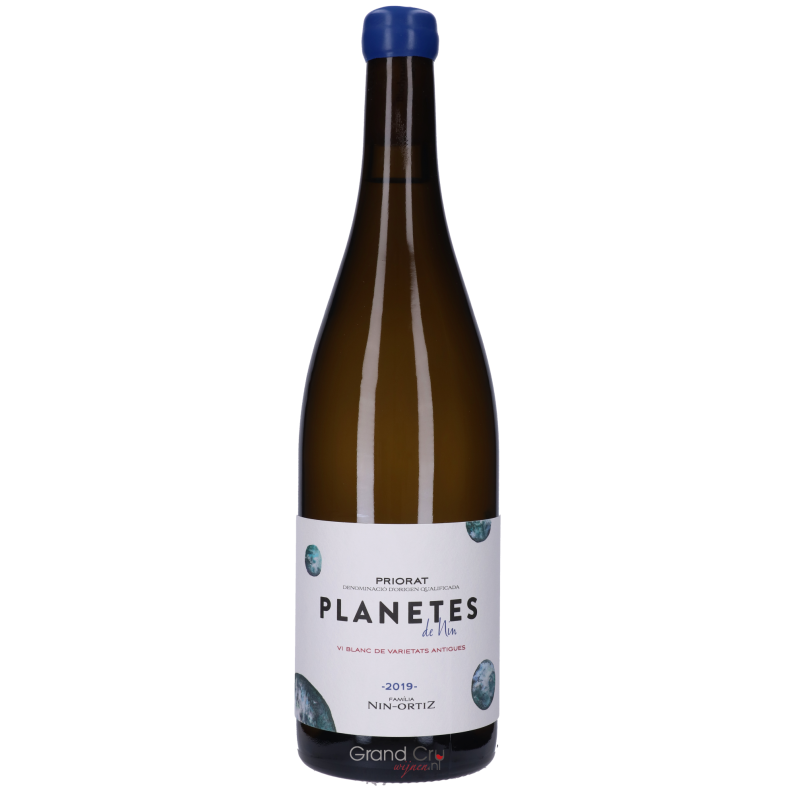
| Type of Wine | White |
|---|---|
| Country | Spain |
| Region | |
| Appellation | Priorat (Appellation) |
| Winery | Nin-Ortiz |
| Vintage | 2019 |
| Grape | Cariñena Blanca |
| Content (Alc) | 0.75 ltr (13%) |
| Drink window | 2021 - 2025 |
In stock
6 items available
Description
Ester Nin and Carles Ortiz are the proud owners of this tiny wine estate with vineyards in Porrera and Torroja and in Gratallops. Ester is an oenologist and biologist and originally from the higher part of the Penedès, in El Pla de Manlleu. Carles is in charge of the vineyard, along with his mules Negret and Max. Ester is best known for her work as an oenologist of Clos Erasmus in Gratallops and of NUN, the top white wine of Enric Soler in the Penedès of which she vinified the first vintages. She resolutely opts for biodynamics in all her projects. The Planetes: Located on a terrain llicorella with a lot of iron oxide, called ferral, much harder than regular llicorella. The new vineyards (between 5 and 13 years old) are planted on terraces and part on old 'costers' (Carinyena), visible from the road between Falset and Porrera.
Planetes de Nin blanc was the first millésime in 2014. The Planetes Nin Blanc is made from the almost disappeared grape variety Carinyena blanca, which is rightly seeing a revival, especially now that the inhospitable Priorat has rightly become so popular. The wine is completely biodynamically grown and vinified vinification. No addition of sulfite during vinification. Elevage on one 700 liter amphora and then a further aging of 3 months in older barrels. This beautiful white Priorat has a beautiful light yellow color. In the nose notes of green herbs, garrigue, Mediterranean, but still fresh. Light in the mouth, but with a lot of character. Mineral undertones and fresh at the end. 94+/100 Parker
FACT: Cariñena Blanca is finally considered a grape to be allowed by the Priorat appellation thanks to the Nin-Ortiz family, who produce their Planetes de Nin Carinyena Blanca with the obsession to have a white Priorat that retains good acidity but less 'heavy' than the Grenache white wines.
Specifications
| Block Bundle Options | No |
|---|---|
| Type of Wine | White |
| Country | Spain |
| Region | Catalunya |
| Appellation | Priorat (Appellation) |
| Winery | Nin-Ortiz |
| Grape | Cariñena Blanca |
| Biological certified | No |
| Natural wine | No |
| Vegan | No |
| Vintage | 2019 |
| Drinking as of | 2021 |
| Drinking till | 2025 |
| Alcohol % | 13 |
| Alcohol free/low | No |
| Content | 0.75 ltr |
| Oak aging | Yes |
| Sparkling | No |
| Dessert wine | No |
| Closure | Cork |
| Parker rating | 95 |
| Tasting Profiles | Aromatic, Floral, Complex, Dry, Aged on wood, Powerful, Spicy, Rich, Round, Full, White fruit |
| Drink moments | Barbecue, Cadeau!, Indruk maken, Lekker luxe, Met vrienden, Open haard, Romantisch |
Professional Reviews
Parker
Rating
94+
Release Price
$50
Drink Date
2021 - 2025
Reviewed by
Luis Gutiérrez
Issue Date
30th Dec 2020
Source
Issue 252 End of December 2020, The Wine Advocate
Cariñena Blanca is finally being considered as a grape to be allowed by the Priorat appellation thanks to the Nin-Ortiz family, who keeps producing their 2019 Planetes de Nin Carinyena Blanca with the obsession to have a white Priorat that keeps good acidity and is not heavy. So, they used plant material from 20 plants they found in the old vineyards to graft 100 plants in their Planetes property, and after the first trials, they regrafted another 3,000 vines. The wine is 13.15% alcohol and has a pH of 3.2 even in a warm year like 2019, when they picked the grapes during the first half of September. The clusters were pressed and left to macerate with the skins for 24 hours and the juice let to settle and put to ferment in 300-liter oak barrels with indigenous yeasts, a slow fermentation of between 40 and up to 180 days. The wine matured for nine months. The warm vintage made the grapes ripen properly, as Cariñena Blanca has difficulties ripening (this is the first time the wine is over 13%), and it has more flavors and aromas. It also has a little more volume and is textured and richer, with deep flavors while keeping the freshness and acidity and with a salty touch in the finish. 3,560 bottles were filled in June 2020.
Familia Nin-Ortiz has their new winery in their Les Planetes vineyard, which gives them enough space to work and do the things right at the right time, as during the last 15 years they have worked in their home cellar in the center of Porrera. They have also planted 0.72 hectares of Cariñena Blanca around the winery, a variety that is being considered for inclusion in the list of allowed grapes by the Priorat appellation. They are planning to plant a further 1.23 hectares of "coster" (slope) with plant material from their La Coma d'en Romeu vineyard.
In the meantime, they are getting ready to adapt their wines to the new official categories from the appellation—old vines, lieu-dit or cru and single-vineyard wines. They also have Selma, a wine from Pla de Manlleu in Penedès where they have three hectares of recently planted vines at 700 meters in altitude. They produce a total of 25,000 bottles and eight different wines. Their small size allows them to pay attention to detail. In 2017, they escaped the frost in Pla de Manlleu, and 2018 was a good crop of high quality in Priorat, wines of lower alcohol and more acidity. The single-vineyard 2018 Mas d'en Caçador took two years to ferment and only completed fermenting the week before I tasted this collection, so I couldn't taste it. 2019 was much warmer, with peaks of 43 degrees Celsius that turned some vineyards into hell. The vineyards are certified organic, and they belong to the biodynamic group Renaissance des Appellations but are not certified. Lovely wines and lovely people.
Lorem ipsum dolor sit amet, consectetur adipiscing elit. Sed do eiusmod tempor incididunt ut labore et dolore magna aliqua...
Exclusive Content
Sign in to unlock professional wine reviews from world-renowned critics
Ester Nin and Carles Ortiz are the proud owners of this tiny wine estate with vineyards in Porrera and Torroja and in Gratallops. Ester is an oenologist and biologist and originally from the higher part of the Penedès, in El Pla de Manlleu. Carles is in charge of the vineyard, along with his mules Negret and Max. Ester is best known for her work as an oenologist of Clos Erasmus in Gratallops and of NUN, the top white wine of Enric Soler in the Penedès of which she vinified the first vintages. She resolutely opts for biodynamics in all her projects. The Planetes: Located on a terrain llicorella with a lot of iron oxide, called ferral, much harder than regular llicorella. The new vineyards (between 5 and 13 years old) are planted on terraces and part on old 'costers' (Carinyena), visible from the road between Falset and Porrera.
Planetes de Nin blanc was the first millésime in 2014. The Planetes Nin Blanc is made from the almost disappeared grape variety Carinyena blanca, which is rightly seeing a revival, especially now that the inhospitable Priorat has rightly become so popular. The wine is completely biodynamically grown and vinified vinification. No addition of sulfite during vinification. Elevage on one 700 liter amphora and then a further aging of 3 months in older barrels. This beautiful white Priorat has a beautiful light yellow color. In the nose notes of green herbs, garrigue, Mediterranean, but still fresh. Light in the mouth, but with a lot of character. Mineral undertones and fresh at the end. 94+/100 Parker
FACT: Cariñena Blanca is finally considered a grape to be allowed by the Priorat appellation thanks to the Nin-Ortiz family, who produce their Planetes de Nin Carinyena Blanca with the obsession to have a white Priorat that retains good acidity but less 'heavy' than the Grenache white wines.
| Block Bundle Options | No |
|---|---|
| Type of Wine | White |
| Country | Spain |
| Region | Catalunya |
| Appellation | Priorat (Appellation) |
| Winery | Nin-Ortiz |
| Grape | Cariñena Blanca |
| Biological certified | No |
| Natural wine | No |
| Vegan | No |
| Vintage | 2019 |
| Drinking as of | 2021 |
| Drinking till | 2025 |
| Alcohol % | 13 |
| Alcohol free/low | No |
| Content | 0.75 ltr |
| Oak aging | Yes |
| Sparkling | No |
| Dessert wine | No |
| Closure | Cork |
| Parker rating | 95 |
| Tasting Profiles | Aromatic, Floral, Complex, Dry, Aged on wood, Powerful, Spicy, Rich, Round, Full, White fruit |
| Drink moments | Barbecue, Cadeau!, Indruk maken, Lekker luxe, Met vrienden, Open haard, Romantisch |
Parker
Rating
94+
Release Price
$50
Drink Date
2021 - 2025
Reviewed by
Luis Gutiérrez
Issue Date
30th Dec 2020
Source
Issue 252 End of December 2020, The Wine Advocate
Cariñena Blanca is finally being considered as a grape to be allowed by the Priorat appellation thanks to the Nin-Ortiz family, who keeps producing their 2019 Planetes de Nin Carinyena Blanca with the obsession to have a white Priorat that keeps good acidity and is not heavy. So, they used plant material from 20 plants they found in the old vineyards to graft 100 plants in their Planetes property, and after the first trials, they regrafted another 3,000 vines. The wine is 13.15% alcohol and has a pH of 3.2 even in a warm year like 2019, when they picked the grapes during the first half of September. The clusters were pressed and left to macerate with the skins for 24 hours and the juice let to settle and put to ferment in 300-liter oak barrels with indigenous yeasts, a slow fermentation of between 40 and up to 180 days. The wine matured for nine months. The warm vintage made the grapes ripen properly, as Cariñena Blanca has difficulties ripening (this is the first time the wine is over 13%), and it has more flavors and aromas. It also has a little more volume and is textured and richer, with deep flavors while keeping the freshness and acidity and with a salty touch in the finish. 3,560 bottles were filled in June 2020.
Familia Nin-Ortiz has their new winery in their Les Planetes vineyard, which gives them enough space to work and do the things right at the right time, as during the last 15 years they have worked in their home cellar in the center of Porrera. They have also planted 0.72 hectares of Cariñena Blanca around the winery, a variety that is being considered for inclusion in the list of allowed grapes by the Priorat appellation. They are planning to plant a further 1.23 hectares of "coster" (slope) with plant material from their La Coma d'en Romeu vineyard.
In the meantime, they are getting ready to adapt their wines to the new official categories from the appellation—old vines, lieu-dit or cru and single-vineyard wines. They also have Selma, a wine from Pla de Manlleu in Penedès where they have three hectares of recently planted vines at 700 meters in altitude. They produce a total of 25,000 bottles and eight different wines. Their small size allows them to pay attention to detail. In 2017, they escaped the frost in Pla de Manlleu, and 2018 was a good crop of high quality in Priorat, wines of lower alcohol and more acidity. The single-vineyard 2018 Mas d'en Caçador took two years to ferment and only completed fermenting the week before I tasted this collection, so I couldn't taste it. 2019 was much warmer, with peaks of 43 degrees Celsius that turned some vineyards into hell. The vineyards are certified organic, and they belong to the biodynamic group Renaissance des Appellations but are not certified. Lovely wines and lovely people.
Lorem ipsum dolor sit amet, consectetur adipiscing elit. Sed do eiusmod tempor incididunt ut labore et dolore magna aliqua...
Exclusive Content
Sign in to unlock professional wine reviews from world-renowned critics
 Follow the latest news about all our wines, promotions, and new selections.