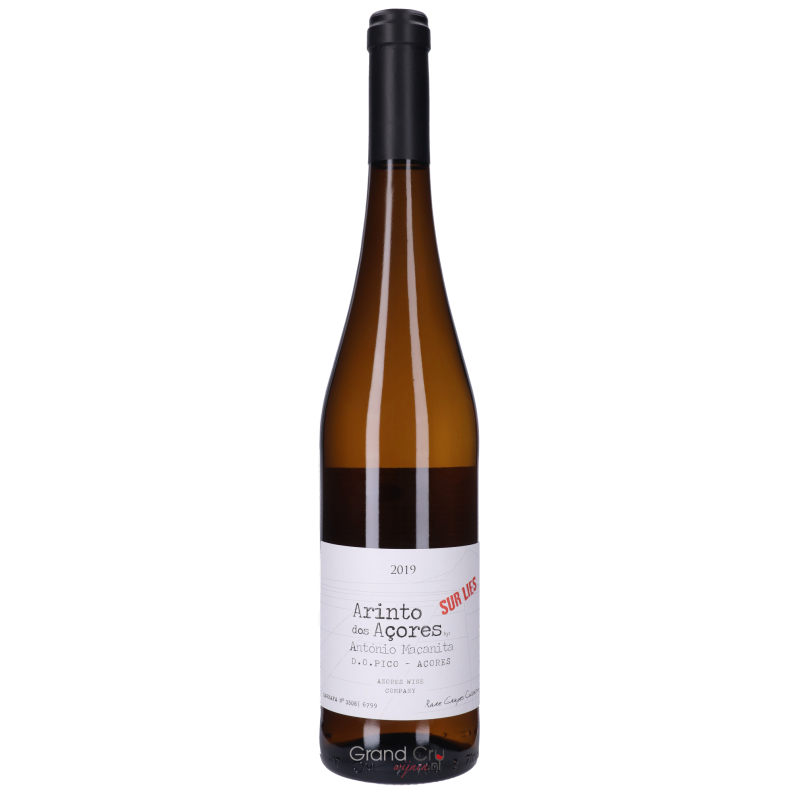
2019 Azores Wine Company Arinto Dos Açores Sur Lies
| Type of Wine | White |
|---|---|
| Country | |
| Region | |
| Appellation | Pico |
| Winery | |
| Vintage | 2019 |
| Grape | |
| Content (Alc) | 0.75 ltr (12.5%) |
| Drink window | 2021 - 2032 |
Out of Stock
Currently unavailable
Notify me when this product is back in stock
Description
Wine from the Portuguese Azores means an Atlantic ocean injection. In the Azores, a group of islands in the Atlantic Ocean about 1400 kilometers west of Lisbon, wine has been made since the sixteenth century. But so little that you hardly ever see the Azores wines on the European mainland. They produce around 20,000 liters per year, which is about the annual harvest in the Azores. It is all white and a large part is reinforced with alcohol. The wine is made from typical Portuguese grapes, such as the Verdelho and the Arinto. What is also unknown, but certainly not unloved by the wine connoisseur, because the Azores have a great wine climate. The sea wind ensures healthy grape vines that do not require chemical intervention. Moisture, sun and a large difference in temperature make the wines of the Azores unprecedentedly beautiful. Without a doubt, the most famous and renowned winery in the Azores is Azores Wine Company. They may have one of the most unique terroirs in the world, in the middle of the Atlantic, and at the foot of the volcanic mountain Pico, the vineyards are planted in the fractures of the rocks, next to the sea, where you can " singing the crabs "belongs, because there is more sun and warmth.
This 100% Arinto dos Açores is an original variety and exclusively for the Azores Islands and as the name suggests, this wine from the Azores has had a long sur Lie upbringing. In the nose pure mineral and slightly salty aromas with notes of grapefruit. In the mouth a very present minerality and acidity, good persistence and salty tones. This wine almost screams for oysters, grilled (sea) fish,
The 2016 volume has received 91/100 Parker points.
Specifications
| Block Bundle Options | No |
|---|---|
| Type of Wine | White |
| Country | Portugal |
| Region | Azores |
| Appellation | Pico |
| Winery | Azores Wine Company |
| Grape | Arinto dos Açores |
| Biological certified | No |
| Natural wine | No |
| Vegan | No |
| Vintage | 2019 |
| Drinking as of | 2021 |
| Drinking till | 2032 |
| Alcohol % | 12.5 |
| Alcohol free/low | No |
| Content | 0.75 ltr |
| Oak aging | No |
| Sparkling | No |
| Dessert wine | No |
| Closure | Cork |
| Parker rating | 93 |
| Tasting Profiles | Aromatic, Dry, Fruity, Aged on wood, Spicy, White fruit |
| Drink moments | Lekker luxe, Met vrienden |
Professional Reviews
Parker
Rating
93
Release Price
$45
Drink Date
2021 - 2032
Reviewed by
Mark Squires
Issue Date
29th Jan 2021
Source
End of January 2021, The Wine Advocate
The 2019 Arinto dos Açores Sur Lies is mostly unoaked (20% of the juice was in neutral wood), bone dry (half a gram of residual sugar) and comes in at 12.4% alcohol. As much as I like the winery's "regular" Arinto, I usually find this to be a small step up. This year they are pretty close. More importantly, the style is rather different. It depends ultimately on what you like—and that's why you read the tasting notes, not just look at the scores. This is rounder and more caressing in texture but less zippy. The concentration is better and it soaks up the acidity a bit more, creating a rather different balance. While this more easily counters the acidity and seems less penetrating as a result, don't be confused—it has plenty of acidity. It's just a matter of perception and incremental change. Overall, this looks poised to age well. It will be interesting to see how it develops. There were 6,799 bottles produced.
The whites here are glorious. The somewhat eccentric and lighter-styled reds are another story, but the reputation of the winery rests with its white output. They are special and distinctive.
For 2019 (the vintage for most of these), there wasn't as much produced. This, said owner-winemaker António Moita Maçanita, is a low-yield year where the vines produced less than 1,000 kilograms per hectare (compared with 1,500 for the 2018 Vinha Centenária this issue, a relatively generous year). They are small-production wines in the best of circumstances, of course, which partly accounts for the price points. He compared 2019 to 2016 and 2014, "where the wines are normally very oily, very textured and intense [with an] Azores, ocean character." He added that the "2019 vintage in Azores was wet, low yielding and stormy" and said they lost part of one of their vineyards in the “criação velha” area near the ocean due to a storm.
Maçanita said that in Azores, they are under the "Proteção integrada regime," which translates to "sustainable." They also have four hectares under organic. And with the impossibility of using tractors, all vineyards are treated by hand. In regards to sulfites, he said they are "for now the only trustable, measurable analysis that demonstrates how a winery works. In this era of so much [misinformation] about natural/organic/biodynamic, SO2 levels [are] the only thing we can measure. We every year [are] the lowest or one of the lowest of Portugal....Our whites are half to one-third of average sulfites [for] whites. For me, it is relevant, and that is why I started to put it on the back label. Transparency yes, BS no...."
Lorem ipsum dolor sit amet, consectetur adipiscing elit. Sed do eiusmod tempor incididunt ut labore et dolore magna aliqua...
Exclusive Content
Sign in to unlock professional wine reviews from world-renowned critics
Wijnhuis
Without a doubt the most famous and renowned Azorean winery is Azores Wine Company. They may have one of the most unique terroirs in the world, in the middle of the Atlantic Ocean, and at the foot of the volcanic mountain Pico, the vineyards are planted in the fractures of the rocks, next to the sea, where you can " singing the crabs ", because there is more sun and warmth. The extraordinary Azores wine company was founded in 2014 by two Azoreans, Filipe Rocha and Paulo Machado, and the charismatic oenologist Rugby and the winemaker António Maçanita with only 12 hectares of vineyards , about 100 years old.

Wine from the Portuguese Azores means an Atlantic ocean injection. In the Azores, a group of islands in the Atlantic Ocean about 1400 kilometers west of Lisbon, wine has been made since the sixteenth century. But so little that you hardly ever see the Azores wines on the European mainland. They produce around 20,000 liters per year, which is about the annual harvest in the Azores. It is all white and a large part is reinforced with alcohol. The wine is made from typical Portuguese grapes, such as the Verdelho and the Arinto. What is also unknown, but certainly not unloved by the wine connoisseur, because the Azores have a great wine climate. The sea wind ensures healthy grape vines that do not require chemical intervention. Moisture, sun and a large difference in temperature make the wines of the Azores unprecedentedly beautiful. Without a doubt, the most famous and renowned winery in the Azores is Azores Wine Company. They may have one of the most unique terroirs in the world, in the middle of the Atlantic, and at the foot of the volcanic mountain Pico, the vineyards are planted in the fractures of the rocks, next to the sea, where you can " singing the crabs "belongs, because there is more sun and warmth.
This 100% Arinto dos Açores is an original variety and exclusively for the Azores Islands and as the name suggests, this wine from the Azores has had a long sur Lie upbringing. In the nose pure mineral and slightly salty aromas with notes of grapefruit. In the mouth a very present minerality and acidity, good persistence and salty tones. This wine almost screams for oysters, grilled (sea) fish,
The 2016 volume has received 91/100 Parker points.
| Block Bundle Options | No |
|---|---|
| Type of Wine | White |
| Country | Portugal |
| Region | Azores |
| Appellation | Pico |
| Winery | Azores Wine Company |
| Grape | Arinto dos Açores |
| Biological certified | No |
| Natural wine | No |
| Vegan | No |
| Vintage | 2019 |
| Drinking as of | 2021 |
| Drinking till | 2032 |
| Alcohol % | 12.5 |
| Alcohol free/low | No |
| Content | 0.75 ltr |
| Oak aging | No |
| Sparkling | No |
| Dessert wine | No |
| Closure | Cork |
| Parker rating | 93 |
| Tasting Profiles | Aromatic, Dry, Fruity, Aged on wood, Spicy, White fruit |
| Drink moments | Lekker luxe, Met vrienden |
Parker
Rating
93
Release Price
$45
Drink Date
2021 - 2032
Reviewed by
Mark Squires
Issue Date
29th Jan 2021
Source
End of January 2021, The Wine Advocate
The 2019 Arinto dos Açores Sur Lies is mostly unoaked (20% of the juice was in neutral wood), bone dry (half a gram of residual sugar) and comes in at 12.4% alcohol. As much as I like the winery's "regular" Arinto, I usually find this to be a small step up. This year they are pretty close. More importantly, the style is rather different. It depends ultimately on what you like—and that's why you read the tasting notes, not just look at the scores. This is rounder and more caressing in texture but less zippy. The concentration is better and it soaks up the acidity a bit more, creating a rather different balance. While this more easily counters the acidity and seems less penetrating as a result, don't be confused—it has plenty of acidity. It's just a matter of perception and incremental change. Overall, this looks poised to age well. It will be interesting to see how it develops. There were 6,799 bottles produced.
The whites here are glorious. The somewhat eccentric and lighter-styled reds are another story, but the reputation of the winery rests with its white output. They are special and distinctive.
For 2019 (the vintage for most of these), there wasn't as much produced. This, said owner-winemaker António Moita Maçanita, is a low-yield year where the vines produced less than 1,000 kilograms per hectare (compared with 1,500 for the 2018 Vinha Centenária this issue, a relatively generous year). They are small-production wines in the best of circumstances, of course, which partly accounts for the price points. He compared 2019 to 2016 and 2014, "where the wines are normally very oily, very textured and intense [with an] Azores, ocean character." He added that the "2019 vintage in Azores was wet, low yielding and stormy" and said they lost part of one of their vineyards in the “criação velha” area near the ocean due to a storm.
Maçanita said that in Azores, they are under the "Proteção integrada regime," which translates to "sustainable." They also have four hectares under organic. And with the impossibility of using tractors, all vineyards are treated by hand. In regards to sulfites, he said they are "for now the only trustable, measurable analysis that demonstrates how a winery works. In this era of so much [misinformation] about natural/organic/biodynamic, SO2 levels [are] the only thing we can measure. We every year [are] the lowest or one of the lowest of Portugal....Our whites are half to one-third of average sulfites [for] whites. For me, it is relevant, and that is why I started to put it on the back label. Transparency yes, BS no...."
Lorem ipsum dolor sit amet, consectetur adipiscing elit. Sed do eiusmod tempor incididunt ut labore et dolore magna aliqua...
Exclusive Content
Sign in to unlock professional wine reviews from world-renowned critics
Without a doubt the most famous and renowned Azorean winery is Azores Wine Company. They may have one of the most unique terroirs in the world, in the middle of the Atlantic Ocean, and at the foot of the volcanic mountain Pico, the vineyards are planted in the fractures of the rocks, next to the sea, where you can " singing the crabs ", because there is more sun and warmth. The extraordinary Azores wine company was founded in 2014 by two Azoreans, Filipe Rocha and Paulo Machado, and the charismatic oenologist Rugby and the winemaker António Maçanita with only 12 hectares of vineyards , about 100 years old.
 Follow the latest news about all our wines, promotions, and new selections.