2021 Dominio de Pingus PSI Peter Sisseck Magnum
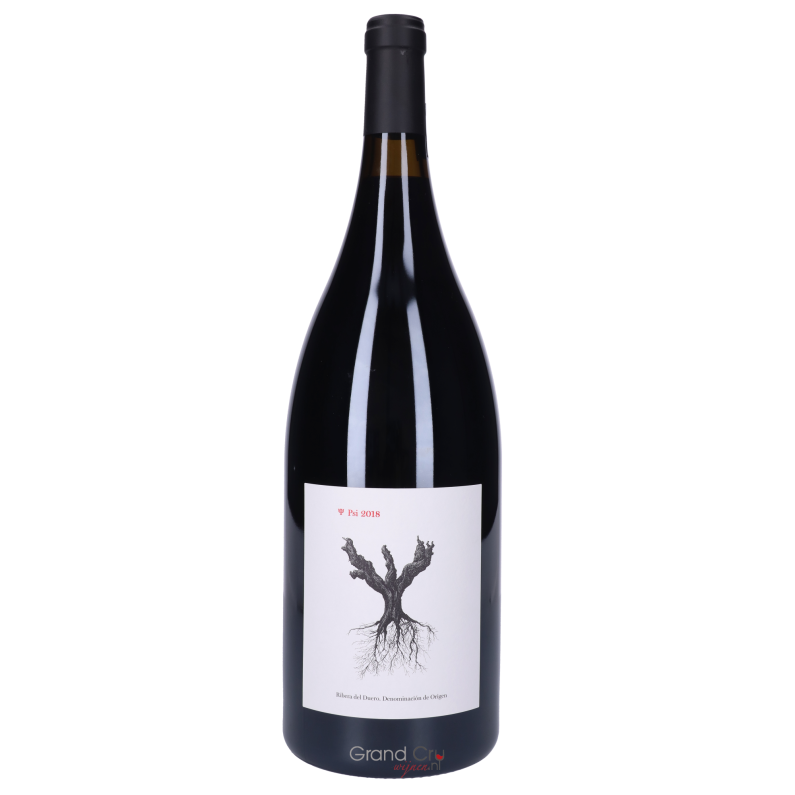
De specificaties zoals vermeld bij de wijn (o.a. wijnjaar) en in de titel zijn leidend en er kunnen geen rechten worden ontleend aan de afbeelding die wordt getoond. Lees meer in onze Frequenty asked questions
| Type of Wine | Red |
|---|---|
| Country | Spain |
| Region | |
| Appellation | Ribera del Duero |
| Winery | |
| Vintage | 2021 |
| Grape | |
| Content (Alc) | 1.5 ltr (14%) |
| Drink window | 2023 - 2030 |
Description
The PSI is wine from the renowned winemaker Peter Sisseck, who is also known for the cult wine Pingus and Flor de Pingus. Peter Sisseck's famous bodega Dominio de Pingus in Ribera del Duero will give its wines considerably less wood. He believes that anyone who exaggerates suffers from winemaker laziness. PSI are also the initials of Peter SIsseck
The healthier the vineyard and the better the management, the less wood aging is necessary, is his position. In Brazil, the same vision was expressed during Wijnwijs.eu's visit to one of the top wine boutiques. Sisseck previously noticed that new oak yielded reduction in wine from a certain parcel in the barrel. Unripe tannins started to absorb oxygen. The bodega wants to avoid this in the future by drastically reducing the use of wood. Less but much more expensive, because Dominio de Pingus now uses the T5 from Taransaud, which costs 1200 euros. Almost twice as expensive as the usual 225 liter barriques.
In the glass the wine has a deep fresh red color. The PSI is a robust wine with Tempranillo expression of the highest level: class, fruit, soft, sunny. Different structure than the other wines from this domain, in a less ripe style. Firm and fleshy start with lots of fruit that is somewhat weighed down by the tannins in the beginning. A wine that needs a lot of air in the beginning. Meaty finale with a nod to the authentic Ribera style of the past. Great glass of wine, but hey, it's also from Sisseck.
FACT: The wine is in our conditioned Wine Warehouse and if you pick up the wine you will also receive a nice discount. You will see your discount immediately when you choose Collect in the Checkout page. We are almost next to the Rijksweg with plenty of parking. Click here for our address.
Specifications
| Block Bundle Options | No |
|---|---|
| Type of Wine | Red |
| Country | Spain |
| Region | Castilla y Leon |
| Appellation | Ribera del Duero |
| Winery | Dominio de Pingus |
| Grape | Tempranillo |
| Biological certified | No |
| Natural wine | No |
| Vegan | No |
| Vintage | 2021 |
| Drinking as of | 2023 |
| Drinking till | 2030 |
| Alcohol % | 14 |
| Alcohol free/low | No |
| Content | 1.5 ltr |
| Oak aging | Yes |
| Sparkling | No |
| Dessert wine | No |
| Closure | Cork |
| Parker rating | 95 |
| James Suckling rating | 94 |
| Tasting Profiles | Complex, Dry, Aged on wood, Powerful, Spicy, Red fruit, Tannines, Full |
| Drink moments | Indruk maken, Lekker luxe, Open haard |
Professional Reviews
Parker
The Wine Advocate
RP (93-95)
Reviewed by:
Luis Gutiérrez
Release Price:
$40
Drink Date:
2023 - 2029
A new era starts in 2021, when they got a new winemaker for PSI. The 2021 PSI—still unbottled, as it should have an élevage of 20 months—comes from a cooler year than 2020, but it was also a drier vintage and the wine has more finesse than in 2020. It develops a note of honey, beeswax and pollen—Peter thinks this comes from the wine from Gumiel de Izán (and it also happens in Quintana del Pidio), as the 2021 has a significant percentage from Gumiel de Izán. 2021 is an approachable vintage, and the wine feels very elegant. It has 14.1% alcohol, slightly higher than 2020, but even if they do not harvest looking at the alcohol, they try to avoid going over 14%. I tasted a sample from 80% oak vat and 20% in barrel, with some new barrels. This is going in the right direction. They expect to bottle some 360,000 bottles. As they harvest early, they start the élevage almost one month earlier than others, so they think the wine might be bottled in May 2023.
I tasted the bottled 2020s from Peter Sisseck and the samples from 2021 that I had already tasted last year. 2020 was the year of COVID-29, a very unusual year with circumstances previously unheard of. They had a lot of rain in spring that allowed for wines with finesse (which he compared with 1996 in some things). In 1995, he harvested late (October) with 1,200 kilos per hectare, and the wine did not reach 14% alcohol. If you did those yields and dates today, you'd get 20% alcohol, so there is a need to adjust viticulture. In 2020, they started harvesting on September 10 (which is early, but they started even earlier in 2022, on September 7), but the question is always about lack of concentration and green tannins. They are very careful with extraction, shorter pumping overs, etc. He considers 2012 and 2016 years of change, and the wines are now subtler even if analytics are similar, but the perception is different. The experience is that when the wines are above 15% alcohol, they do not age well. 2020 has fine tannins, but it was a warm year of approachable wines, when they did a slightly longer élevage than he thought at first (they were bottled in July 2022 with some more time in tank because he bought a new bottling line). There will be a new wine from 2021 produced by the next generation, Leonora Sisseck and husband Carlos del Río Jr., from a young vineyard planted with 15% Garnacha, produced in a young and fresh style, quite different. I didn't taste anything from 2022, but he told me the result is better than expected, because he was seriously worried if they were going to be able to harvest any grapes at all!
I tasted the barrel samples from 2021, a dry year in Ribera del Duero, with a little rain in June, but it's a vintage for which Peter Sisseck felt the key was the low temperatures at night. So, 2021 is cooler than 2020; and in 2021, they harvested one week earlier than in 2020, earlier than the majority of wineries in Ribera del Duero, as he finished when the most hadn't even started. All the wines are between 13.5% and 14% alcohol (the Flor was a little higher, 14.2%, with 20% new barrels). However, Sisseck still classifies 2021 as a warm vintage, following the path of 2015 and 2016, perhaps a little more austere, perhaps the tannins are a little more noticeable and the wines are going to benefit from the élevage, for Sisseck a more classical vintage. But it's not a super warm vintage like 2009 or 2015, perhaps more in the line of the 2018 with more punch, closer to the 2016 and 2018 than 2015. But it's going to be a heterogeneous vintage in Ribera del Duero, despite what the official classification of the vintage by the appellation might have been (excellent, nonetheless!). I think the 2021s here are incredibly elegant. The first year when they harvested early was 2016, and this is the evolution within that era. In 2021, all wines, except PSI, are certified organic, and they used the new barrels that had previously been used for PSI, so no new oak in Pingus again. Amelia was fermented with 50% full clusters; it's a rare and limited wine from a single vineyard that is sold exclusively in the US. There might be a new wine in 2021, a textured red with grip and good volume, a wine with 20% Garnacha fermented with 25% full clusters. It's not clear what they are going to do with it, the result of a half hectare of five-year-old vines Sisseck planted with Tinta del País and Garnacha. There are four (used) barrels of this. Time will tell. ...
Lorem ipsum dolor sit amet, consectetur adipiscing elit. Sed do eiusmod tempor incididunt ut labore et dolore magna aliqua...
James Suckling
DOMINIO DE PINGUS RIBERA DEL DUERO PSI 2021
Monday, September 18, 2023
CountrySpain
RegionCastilla y León
Vintage2021
CHECK PRICE
DOWNLOAD SHELFTALKER
Score
94
Black cherries, asphalt, hedgerow, dark spices and dried Mediterranean herbs. Medium- to full-bodied on the palate with dusty, effusive tannins and a vertical finish. Pristine and stripped-down. Drink or hold.
Zekun Shuai
Senior Editor
Lorem ipsum dolor sit amet, consectetur adipiscing elit. Sed do eiusmod tempor incididunt ut labore et dolore magna aliqua...
Exclusive Content
Sign in to unlock professional wine reviews from world-renowned critics
Wijnhuis
Peter Sisseck is one of Spain's most famous winemakers. However, it is Danish in origin. He gained experience as a young oenologist in Bordeaux and California and then started in 1990 as an oenologist at the Hacienda Monasterio domain in Ribera del Duero. It was here that he learned to estimate the real potential of the Tinto Fino. In 1995 he made his first own wine in a garage in Quintanilla de Onésimo. The Pingus myth was born.
The domain name and wine name 'Pingus' was his nickname in Denmark. After Pingus, his top wine, Flor de Pingus followed. The name and fame followed very quickly. America's most famous wine critic, on a trip in Bordeaux at the time, almost accidentally tasted the Pingus and praised it as Spain's absolute top wine. Pingus therefore has everything: strength, finesse, concentration and elegance. A rather unique combination in this region. During the 90's he used the vineyards of his friend Pedro Cuadrado from Finca Villacreces, located in the same village, for Flor de Pingus, and also occasionally did the vinification. Only in 2004 did he have his own small bodega ready in the center of the village. Sisseck has worked with old vines from the beginning and grows them according to the biodynamic principles. Together with Pablo Rubio he started the project 'Psi' in 2007: in this case we do not work with vines owned, but in collaboration with owners of old plots Tinto Fino. After a selection of the best plots, a wine is made that brings back the traditional vinification methods of the region. The aim is to make a wine that is more balanced, fair and balanced.
In Dominio de Pingus we only work with Tinto Fino, mainly from old vines. Particular importance is attached to the history of the region in the Psi project, which he set up together with Pablo Rubio. In 1990, there were 9,000 hectares of vineyards in the appellation, of which 6,000 hectares were old vines. Today we see more than 22,000 ha with only 4000 ha of old vines. All plots selected by Sisseck are the result of an intensive search for the best old vines Tinto Fino, with the best balance in a natural way and fully in accordance with the principles of biodynamics.
Pingus: this wine is the result of 2 complementary terroirs in the village of La Horra, 2 prefiloxera vineyards over 80 years old and very balanced, 4.5 ha in total. Barroso: an old terrace of the Duero, pebble and sand on clay and lime. San Cristóbal: a clay-like slope with a south-west exposition.
Flor de Pingus: from 16 different plots around La Horra and Roa; assembly of old vines and a number of younger vineyards. The plots for these wines are located in the heart of Ribera del Duero, at an altitude between 700 and 850 m; the terrain is hilly.
Psi: in the valleys of the Gromejón and Perales, tributaries of the Duero. Almost always slopes of sandy origin and lime to loam-clay soils, with the presence of pebbles to a greater or lesser extent. The plots are between 830 to 920 m height with very good drainage. It is all these elements that give the Psi a nice aromatic intensity, fraiche and soft tannins.
The climate is very continental, especially at the heights in this appellation. All vineyards are cultivated according to the biodynamic principles.
Vinification
Pingus: each grape is de-strained manually, grape by grape. Vinification in 2000 liter oak casks. Malolactic fermentation on new oak and level for 20 to 22 months. Total production of 6000 bottles and a yield of 11 hl / ha.
Flor de Pingus: all plots are vinified separately in stainless steel cuves of 4000 liters. Malolactic fermentation on new oak and level of 16 to 18 months.A total production of 60,000 bottles and a yield of 19 hl / ha
Psi: to obtain a gentle extraction, the vinification takes place in large cement cuves. After that, the wine undergoes further maturing partly on cement, on large wooden casks and in small oak barrels. Depending on the year, production ranges from 100,000 to 200,000 bottles.
The PSI is wine from the renowned winemaker Peter Sisseck, who is also known for the cult wine Pingus and Flor de Pingus. Peter Sisseck's famous bodega Dominio de Pingus in Ribera del Duero will give its wines considerably less wood. He believes that anyone who exaggerates suffers from winemaker laziness. PSI are also the initials of Peter SIsseck
The healthier the vineyard and the better the management, the less wood aging is necessary, is his position. In Brazil, the same vision was expressed during Wijnwijs.eu's visit to one of the top wine boutiques. Sisseck previously noticed that new oak yielded reduction in wine from a certain parcel in the barrel. Unripe tannins started to absorb oxygen. The bodega wants to avoid this in the future by drastically reducing the use of wood. Less but much more expensive, because Dominio de Pingus now uses the T5 from Taransaud, which costs 1200 euros. Almost twice as expensive as the usual 225 liter barriques.
In the glass the wine has a deep fresh red color. The PSI is a robust wine with Tempranillo expression of the highest level: class, fruit, soft, sunny. Different structure than the other wines from this domain, in a less ripe style. Firm and fleshy start with lots of fruit that is somewhat weighed down by the tannins in the beginning. A wine that needs a lot of air in the beginning. Meaty finale with a nod to the authentic Ribera style of the past. Great glass of wine, but hey, it's also from Sisseck.
FACT: The wine is in our conditioned Wine Warehouse and if you pick up the wine you will also receive a nice discount. You will see your discount immediately when you choose Collect in the Checkout page. We are almost next to the Rijksweg with plenty of parking. Click here for our address.
| Block Bundle Options | No |
|---|---|
| Type of Wine | Red |
| Country | Spain |
| Region | Castilla y Leon |
| Appellation | Ribera del Duero |
| Winery | Dominio de Pingus |
| Grape | Tempranillo |
| Biological certified | No |
| Natural wine | No |
| Vegan | No |
| Vintage | 2021 |
| Drinking as of | 2023 |
| Drinking till | 2030 |
| Alcohol % | 14 |
| Alcohol free/low | No |
| Content | 1.5 ltr |
| Oak aging | Yes |
| Sparkling | No |
| Dessert wine | No |
| Closure | Cork |
| Parker rating | 95 |
| James Suckling rating | 94 |
| Tasting Profiles | Complex, Dry, Aged on wood, Powerful, Spicy, Red fruit, Tannines, Full |
| Drink moments | Indruk maken, Lekker luxe, Open haard |
Parker
The Wine Advocate
RP (93-95)
Reviewed by:
Luis Gutiérrez
Release Price:
$40
Drink Date:
2023 - 2029
A new era starts in 2021, when they got a new winemaker for PSI. The 2021 PSI—still unbottled, as it should have an élevage of 20 months—comes from a cooler year than 2020, but it was also a drier vintage and the wine has more finesse than in 2020. It develops a note of honey, beeswax and pollen—Peter thinks this comes from the wine from Gumiel de Izán (and it also happens in Quintana del Pidio), as the 2021 has a significant percentage from Gumiel de Izán. 2021 is an approachable vintage, and the wine feels very elegant. It has 14.1% alcohol, slightly higher than 2020, but even if they do not harvest looking at the alcohol, they try to avoid going over 14%. I tasted a sample from 80% oak vat and 20% in barrel, with some new barrels. This is going in the right direction. They expect to bottle some 360,000 bottles. As they harvest early, they start the élevage almost one month earlier than others, so they think the wine might be bottled in May 2023.
I tasted the bottled 2020s from Peter Sisseck and the samples from 2021 that I had already tasted last year. 2020 was the year of COVID-29, a very unusual year with circumstances previously unheard of. They had a lot of rain in spring that allowed for wines with finesse (which he compared with 1996 in some things). In 1995, he harvested late (October) with 1,200 kilos per hectare, and the wine did not reach 14% alcohol. If you did those yields and dates today, you'd get 20% alcohol, so there is a need to adjust viticulture. In 2020, they started harvesting on September 10 (which is early, but they started even earlier in 2022, on September 7), but the question is always about lack of concentration and green tannins. They are very careful with extraction, shorter pumping overs, etc. He considers 2012 and 2016 years of change, and the wines are now subtler even if analytics are similar, but the perception is different. The experience is that when the wines are above 15% alcohol, they do not age well. 2020 has fine tannins, but it was a warm year of approachable wines, when they did a slightly longer élevage than he thought at first (they were bottled in July 2022 with some more time in tank because he bought a new bottling line). There will be a new wine from 2021 produced by the next generation, Leonora Sisseck and husband Carlos del Río Jr., from a young vineyard planted with 15% Garnacha, produced in a young and fresh style, quite different. I didn't taste anything from 2022, but he told me the result is better than expected, because he was seriously worried if they were going to be able to harvest any grapes at all!
I tasted the barrel samples from 2021, a dry year in Ribera del Duero, with a little rain in June, but it's a vintage for which Peter Sisseck felt the key was the low temperatures at night. So, 2021 is cooler than 2020; and in 2021, they harvested one week earlier than in 2020, earlier than the majority of wineries in Ribera del Duero, as he finished when the most hadn't even started. All the wines are between 13.5% and 14% alcohol (the Flor was a little higher, 14.2%, with 20% new barrels). However, Sisseck still classifies 2021 as a warm vintage, following the path of 2015 and 2016, perhaps a little more austere, perhaps the tannins are a little more noticeable and the wines are going to benefit from the élevage, for Sisseck a more classical vintage. But it's not a super warm vintage like 2009 or 2015, perhaps more in the line of the 2018 with more punch, closer to the 2016 and 2018 than 2015. But it's going to be a heterogeneous vintage in Ribera del Duero, despite what the official classification of the vintage by the appellation might have been (excellent, nonetheless!). I think the 2021s here are incredibly elegant. The first year when they harvested early was 2016, and this is the evolution within that era. In 2021, all wines, except PSI, are certified organic, and they used the new barrels that had previously been used for PSI, so no new oak in Pingus again. Amelia was fermented with 50% full clusters; it's a rare and limited wine from a single vineyard that is sold exclusively in the US. There might be a new wine in 2021, a textured red with grip and good volume, a wine with 20% Garnacha fermented with 25% full clusters. It's not clear what they are going to do with it, the result of a half hectare of five-year-old vines Sisseck planted with Tinta del País and Garnacha. There are four (used) barrels of this. Time will tell. ...
Lorem ipsum dolor sit amet, consectetur adipiscing elit. Sed do eiusmod tempor incididunt ut labore et dolore magna aliqua...
James Suckling
DOMINIO DE PINGUS RIBERA DEL DUERO PSI 2021
Monday, September 18, 2023
CountrySpain
RegionCastilla y León
Vintage2021
CHECK PRICE
DOWNLOAD SHELFTALKER
Score
94
Black cherries, asphalt, hedgerow, dark spices and dried Mediterranean herbs. Medium- to full-bodied on the palate with dusty, effusive tannins and a vertical finish. Pristine and stripped-down. Drink or hold.
Zekun Shuai
Senior Editor
Lorem ipsum dolor sit amet, consectetur adipiscing elit. Sed do eiusmod tempor incididunt ut labore et dolore magna aliqua...
Exclusive Content
Sign in to unlock professional wine reviews from world-renowned critics
Peter Sisseck is one of Spain's most famous winemakers. However, it is Danish in origin. He gained experience as a young oenologist in Bordeaux and California and then started in 1990 as an oenologist at the Hacienda Monasterio domain in Ribera del Duero. It was here that he learned to estimate the real potential of the Tinto Fino. In 1995 he made his first own wine in a garage in Quintanilla de Onésimo. The Pingus myth was born.
The domain name and wine name 'Pingus' was his nickname in Denmark. After Pingus, his top wine, Flor de Pingus followed. The name and fame followed very quickly. America's most famous wine critic, on a trip in Bordeaux at the time, almost accidentally tasted the Pingus and praised it as Spain's absolute top wine. Pingus therefore has everything: strength, finesse, concentration and elegance. A rather unique combination in this region. During the 90's he used the vineyards of his friend Pedro Cuadrado from Finca Villacreces, located in the same village, for Flor de Pingus, and also occasionally did the vinification. Only in 2004 did he have his own small bodega ready in the center of the village. Sisseck has worked with old vines from the beginning and grows them according to the biodynamic principles. Together with Pablo Rubio he started the project 'Psi' in 2007: in this case we do not work with vines owned, but in collaboration with owners of old plots Tinto Fino. After a selection of the best plots, a wine is made that brings back the traditional vinification methods of the region. The aim is to make a wine that is more balanced, fair and balanced.
In Dominio de Pingus we only work with Tinto Fino, mainly from old vines. Particular importance is attached to the history of the region in the Psi project, which he set up together with Pablo Rubio. In 1990, there were 9,000 hectares of vineyards in the appellation, of which 6,000 hectares were old vines. Today we see more than 22,000 ha with only 4000 ha of old vines. All plots selected by Sisseck are the result of an intensive search for the best old vines Tinto Fino, with the best balance in a natural way and fully in accordance with the principles of biodynamics.
Pingus: this wine is the result of 2 complementary terroirs in the village of La Horra, 2 prefiloxera vineyards over 80 years old and very balanced, 4.5 ha in total. Barroso: an old terrace of the Duero, pebble and sand on clay and lime. San Cristóbal: a clay-like slope with a south-west exposition.
Flor de Pingus: from 16 different plots around La Horra and Roa; assembly of old vines and a number of younger vineyards. The plots for these wines are located in the heart of Ribera del Duero, at an altitude between 700 and 850 m; the terrain is hilly.
Psi: in the valleys of the Gromejón and Perales, tributaries of the Duero. Almost always slopes of sandy origin and lime to loam-clay soils, with the presence of pebbles to a greater or lesser extent. The plots are between 830 to 920 m height with very good drainage. It is all these elements that give the Psi a nice aromatic intensity, fraiche and soft tannins.
The climate is very continental, especially at the heights in this appellation. All vineyards are cultivated according to the biodynamic principles.
Vinification
Pingus: each grape is de-strained manually, grape by grape. Vinification in 2000 liter oak casks. Malolactic fermentation on new oak and level for 20 to 22 months. Total production of 6000 bottles and a yield of 11 hl / ha.
Flor de Pingus: all plots are vinified separately in stainless steel cuves of 4000 liters. Malolactic fermentation on new oak and level of 16 to 18 months.A total production of 60,000 bottles and a yield of 19 hl / ha
Psi: to obtain a gentle extraction, the vinification takes place in large cement cuves. After that, the wine undergoes further maturing partly on cement, on large wooden casks and in small oak barrels. Depending on the year, production ranges from 100,000 to 200,000 bottles.
 Follow the latest news about all our wines, promotions, and new selections.